

10 Common Motorcycle Accident Injuries in Florida
Gregg Hollander | September 8, 2026 | Motorcycle Accidents
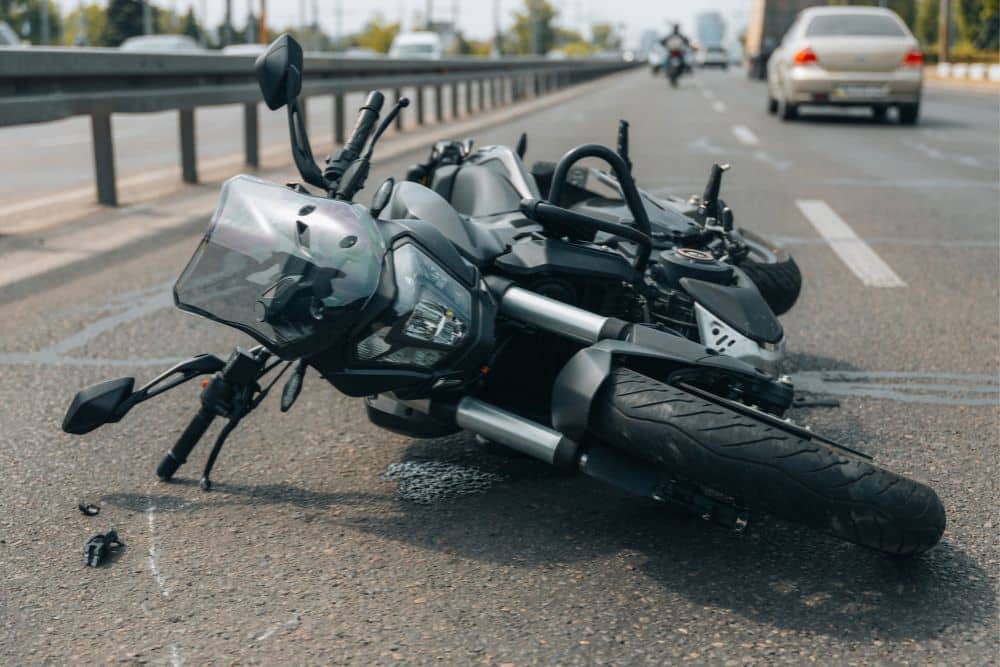
Motorcyclists have little protection when another vehicle strikes them or forces them from the road. Without the passenger compartment, seat belts, airbags, and other safety features found in a car, a rider may absorb the force of a collision directly and be thrown onto the pavement or into another object.
As a result, common motorcycle accident injuries in Florida range from fractures and road rash to traumatic brain injuries, spinal cord damage, and internal bleeding. Some require emergency surgery. Others can cause permanent neurological or physical limitations that affect nearly every part of a person’s life.
The type and severity of a motorcycle accident injury often depend on how the crash occurred and what happened to the rider during and after the initial impact. Our Boca Raton, Florida motorcycle accident lawyer will explain.
For immediate assistance, please call (561) 347-7770 or send us an online message today.
What Are the Most Common Motorcycle Accident Injuries?
A motorcycle crash can subject the body to several different forces within seconds. A rider may strike another vehicle, be ejected from the motorcycle, hit the roadway, and then collide with a fixed object or another vehicle. These different mechanisms can produce multiple serious injuries in the same crash.
1. Traumatic Brain Injuries
A traumatic brain injury (TBI) can occur when a rider’s head strikes a vehicle, pavement, or another object. The sudden acceleration and deceleration of the brain inside the skull can also cause injury even without an obvious penetrating wound.
Motorcycle-related TBIs can include concussions, cerebral contusions, intracranial bleeding, and diffuse axonal injuries caused by rapid movement or rotation of the brain. Bleeding, such as a subdural or epidural hematoma, can increase pressure inside the skull and may require emergency intervention.
The consequences are not always limited to headaches or memory problems. A serious TBI can affect concentration, judgment, speech, balance, personality, emotional regulation, and the ability to work or live independently.
2. Spinal Cord Injuries
A violent impact can fracture or dislocate vertebrae and damage the spinal cord itself. These injuries are related, but not the same. A rider can sustain a spinal fracture without cord damage, while trauma to the spinal cord can cause permanent neurological impairment.
The location and extent of the damage help determine the consequences. Cervical spinal cord injuries can affect both the arms and legs and, in severe cases, breathing. Injuries lower in the spine may result in loss of movement or sensation in the lower body.
Spinal cord injuries may also be classified as complete or incomplete. An incomplete injury means some neurological function remains below the damaged area. Even when paralysis is not complete, a rider may experience weakness, altered sensation, chronic nerve pain, problems with bowel or bladder function, and significant mobility limitations.
3. Broken Bones and Complex Fractures
Motorcycle crashes can produce fractures that are very different from a simple broken bone caused by a fall. Direct impact with a vehicle can shatter bone into multiple pieces, while a rider trapped beneath a motorcycle or vehicle may sustain significant crush damage.
For example, a motorcyclist traveling along Federal Highway in Boca Raton could strike the side of a vehicle that turns left across the rider’s path. The rider’s leg may take the initial impact before the rider is thrown over the motorcycle, potentially causing fractures to the tibia, femur, pelvis, wrist, or other bones.
Open fractures, in which the broken bone pierces through the skin, pose additional concerns about infection and damage to surrounding muscle, nerves, and blood vessels. Pelvic and multiple-extremity fractures can be particularly serious because of the forces required to cause them and the potential for significant blood loss.
Treatment may require plates, screws, rods, or external fixation, followed by months of rehabilitation. Some fractures fail to heal properly, resulting in nonunion or malunion that can require additional surgery and leave lasting problems with strength, mobility, or pain.
4. Road Rash and Serious Skin Injuries
Road rash occurs when a rider slides across pavement and friction removes layers of skin and underlying tissue. Severe cases are much more than scrapes or abrasions.
Deep road rash can expose fat, muscle, or other tissue and may become contaminated with gravel, glass, asphalt, and roadway debris. Treatment can involve extensive wound cleaning and debridement to remove damaged or contaminated tissue. Some riders require skin grafts or reconstructive procedures.
Even after the wounds heal, permanent scarring, changes in skin pigmentation, reduced sensation, and nerve pain may remain. Scarring across the face, arms, hands, or other visible areas can also have lasting consequences beyond the initial physical injury.
5. Internal Organ Injuries and Internal Bleeding
Blunt-force trauma to the chest or abdomen can damage organs and blood vessels without leaving an obvious external injury. Motorcycle riders may suffer lacerations to the liver or spleen, kidney damage, internal bleeding, collapsed lungs, or injuries to the heart and major blood vessels.
A high-speed motorcycle collision on I-95 through Palm Beach or Broward County, for example, can subject a rider to several separate impacts. The rider may first strike a vehicle and then hit the pavement or another object. Each impact can transfer substantial force to the chest and abdomen.
Internal bleeding is particularly dangerous because the severity of the injury may not be immediately apparent. Increasing abdominal pain, weakness, dizziness, difficulty breathing, confusion, or a rapid heart rate can develop as blood loss continues. Severe internal injuries may require emergency surgery, blood transfusions, or intensive care.
6. Neck and Back Injuries
Not every serious spinal injury involves damage to the spinal cord. The sudden twisting, compression, and hyperextension that occur during a motorcycle crash can injure vertebrae, discs, ligaments, muscles, and spinal nerves.
A rider may suffer a herniated disc that compresses a nerve root, producing pain, numbness, tingling, or weakness that travels into an arm or leg. Vertebral fractures can create instability in the spine and, in more serious cases, threaten the spinal cord or surrounding nerves.
Some neck and back injuries improve with conservative treatment. Others require injections, nerve procedures, or spinal surgery. Persistent nerve compression or structural damage can leave a rider with chronic pain and limitations on lifting, walking, sitting, or other everyday activities.
7. Leg, Knee, and Foot Injuries
The lower body is particularly exposed on a motorcycle. A rider’s leg can be struck directly by another vehicle, crushed between the motorcycle and a car, or trapped beneath the bike after it falls.
Beyond fractures, these crashes can tear knee ligaments, damage cartilage, dislocate joints, injure peripheral nerves, and disrupt blood flow to the lower leg or foot. Severe crush injuries can also cause compartment syndrome, a dangerous increase in pressure within muscle compartments that can damage nerves and tissue if it is not treated quickly.
These injuries can be especially difficult because successful treatment does not always restore the rider to their previous level of function. Damage to a weight-bearing joint or major nerve may continue to affect walking, balance, strength, and mobility long after the initial wounds and fractures have healed.
8. Shoulder, Arm, and Hand Injuries
A motorcyclist’s upper body can be injured by direct impact or when the rider instinctively reaches out to brace against a fall. Fractures of the wrist, forearm, and collarbone are possible, as are shoulder dislocations, rotator cuff tears, and damage to the nerves controlling the arm and hand.
One particularly serious injury involves the brachial plexus, the network of nerves that carries signals between the spinal cord and the shoulder, arm, and hand. Severe stretching or tearing of these nerves can cause weakness, loss of sensation, chronic pain, or partial or complete loss of function in the affected arm.
For a rider whose work depends on lifting, gripping, typing, operating equipment, or other precise movements, even an injury confined to one arm or hand can have significant long-term consequences.
9. Facial, Eye, and Dental Injuries
A rider who is thrown forward can strike the pavement, another vehicle, or roadside objects face-first. These impacts can fracture the jaw, cheekbones, nose, or bones surrounding the eye. Riders may also suffer damaged or lost teeth, eye injuries, facial nerve damage, and deep lacerations.
Consider a motorcyclist forced down while traveling through heavy traffic on Broward Boulevard in Fort Lauderdale. Even at a speed below those typically seen on I-95, the rider may slide or tumble across the pavement and sustain direct trauma to the face and head.
Complex facial injuries can require treatment from several specialists, including oral and maxillofacial surgeons, ophthalmologists, dentists, and plastic or reconstructive surgeons. Permanent scarring, vision problems, difficulty eating or speaking, and altered facial sensation can remain after the initial injuries have healed.
10. Crush Injuries and Amputations
When a motorcycle and rider become trapped beneath or between vehicles, the sustained pressure can damage bone, muscle, nerves, and blood vessels simultaneously. In severe cases, compromised circulation can threaten the affected limb’s survival.
Some amputations occur at the scene of the crash. Others become medically necessary when surgeons cannot restore adequate blood flow or when tissue damage, infection, or other complications make it impossible to save the limb.
The consequences extend far beyond the initial hospitalization. A person who loses a limb may need additional surgeries, rehabilitation, prosthetic devices and replacements, modifications to the home or vehicle, and ongoing treatment for residual limb or phantom limb pain. Returning to work and independent daily activities may also require substantial adaptation.
Frequently Asked Questions About Common Motorcycle Accident Injuries in Florida
What Are the Most Serious Types of Motorcycle Injuries?
Traumatic brain injuries, spinal cord damage, internal organ injuries, severe crush injuries, and amputations are among the most serious injury types. These injuries may require emergency surgery, extended hospitalization, rehabilitation, future medical care, and significant changes to how a person works or lives.
Can Motorcycle Crash Injuries Appear Later?
Yes. Some of the most common motorcycle accident injuries may not be immediately apparent after a collision. Symptoms associated with concussions, internal bleeding, soft tissue injuries, and certain spinal injuries can develop or become more noticeable over time. A medical professional should evaluate new or worsening symptoms after a motorcycle accident.
Can You Have Internal Injuries After a Motorcycle Accident Without Knowing It?
Yes. Internal organ or blood vessel damage may occur without obvious external signs. Symptoms such as increasing abdominal or chest pain, dizziness, weakness, confusion, difficulty breathing, or fainting can indicate a potentially serious injury and require prompt medical attention.
Does Wearing a Helmet Affect a Motorcycle Accident Claim in Florida?
It can, depending on the circumstances and injuries involved. Florida law allows certain riders age 21 and older to operate a motorcycle without a helmet if they carry the required medical insurance coverage. Helmet use may become an issue in a claim involving head injuries, but it does not determine who caused the crash.
What If I Was Partially at Fault for a Florida Motorcycle Accident?
Florida follows a modified comparative negligence system for most negligence claims. An injured motorcyclist who is more than 50% responsible generally cannot recover damages. If the rider is 50% or less at fault, compensation can generally be reduced by that percentage.
How Long Do I Have to File a Motorcycle Accident Lawsuit in Florida?
Florida generally provides two years from the date of a motorcycle accident to file a negligence lawsuit for injuries caused by the crash. Some circumstances can affect the applicable deadline, so you should evaluate the specific facts and dates rather than assume every case follows the same timeline.
Serious Motorcycle Injuries Deserve a Careful Look at What Comes Next
A serious motorcycle accident can change far more than your immediate medical needs. The effects may continue through additional surgeries, rehabilitation, time away from work, and lasting changes to your health and independence. Any claim should account for the full impact of those injuries, not simply the bills that have already arrived.
For more than three decades, Gregg Hollander has represented people seriously injured in accidents throughout South Florida. At Hollander Law Firm, we carefully investigate how a motorcycle crash occurred, evaluate the injuries and their long-term consequences, and pursue accountability from those responsible.
If you suffered serious injuries in a Florida motorcycle accident, contact Hollander Law Firm at (561) 347-7770 or by sending an online message today to discuss your case and learn about your legal options.
Legal Resources Used to Inform This Page
To ensure the accuracy and clarity of this page, we referenced official legal resources during the content development process: